Austria Passport Photo 35mm x 45mm requirements
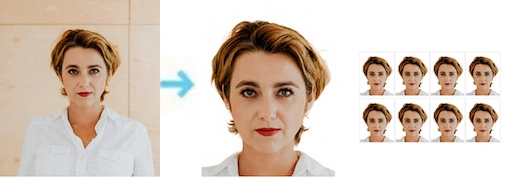
| Photo Size | Width: 35 mm, Height: 45 mm |
| Resolution (DPI) | 600 |
| Background color | White |
| Digital photo size | Width: 827 pixels, Height: 1063 pixels |
| Photo paper type | Glossy |
1. Format and Size
- Dimensions: The photo must be 35 mm x 45 mm.
- Head Size: The head (from chin to the top of the head) must occupy between 70% and 80% of the vertical height of the image (approx. 32–36 mm).
- Centering: The head must be centered in the frame.
2. Quality and Lighting
- Sharpness: The image must be in sharp focus, clear, and high-contrast.
- Lighting: The face must be evenly illuminated. No shadows (e.g., from hair or glasses), reflections, or "red-eye" effects are permitted.
- Paper Quality: If submitted in physical form, the photo must be printed on high-quality, high-resolution paper (minimum 600 dpi) and must not have any creases or ink marks.
3. Background
- Color: A solid, light-colored background is required, preferably light gray.
- Contrast: There must be a clear contrast between the person and the background. The background must be neutral and free of patterns or other objects/people.
4. Facial Expression and Head Position
- Pose: You must look directly into the camera (frontal view). The head should not be tilted or turned.
- Expression: A neutral facial expression is mandatory. The mouth must be closed, and eyes must be open and clearly visible.
- Eyes: Your eyes must not be covered by hair or eyeglass frames.
5. Glasses and Headwear
- Glasses: If you wear glasses, they must not have tinted lenses or reflections. The frames must not obscure any part of the eyes.
- Head Coverings: Generally not allowed. Exceptions are made for religious reasons, provided that the face remains fully visible from the chin to the forehead.
- Uniforms: Photos should ideally be taken in civilian clothing.
6. Recency
- Age of Photo: The photo must not be older than six months to ensure an up-to-date resemblance.
7. Special Rules for Children
- For infants and young children, no other person or object (like a pacifier or a parent's hand) may be visible in the frame. The background must remain neutral. While a neutral expression is preferred, some leniency is often applied to very young infants.
References
Resources
Support
Secure Payments
Powered by PayPal |
© 2025 IDPhotoGo. All rights reserved